






|
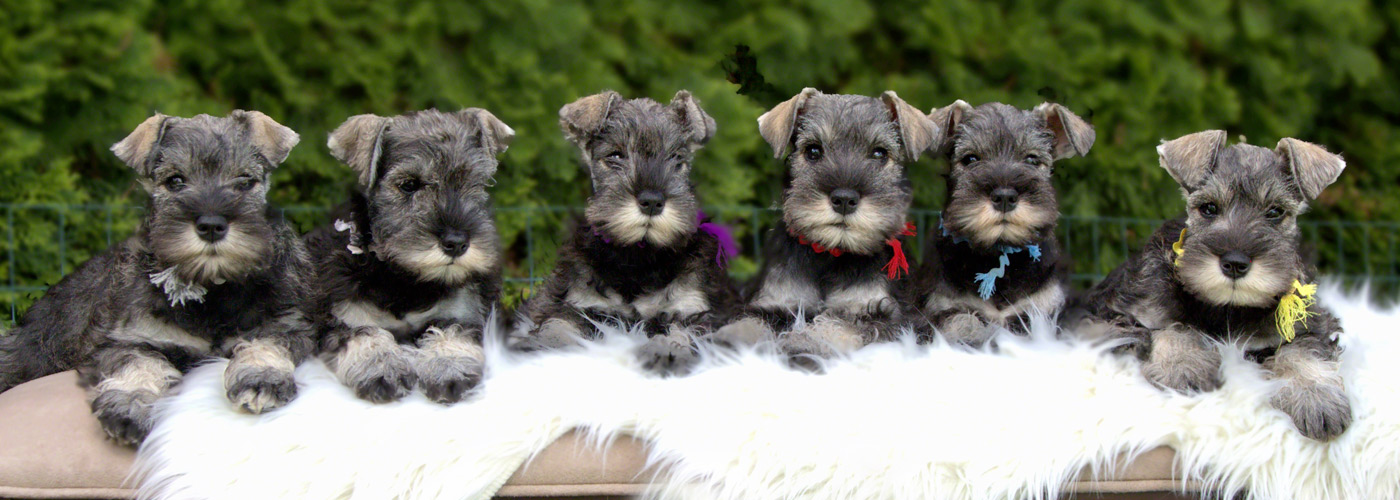
Where can I find a Miniature Schnauzer puppy? |
|
|
|
|
Written by HEX KSA
|
|
Tuesday, 24 July 2007 |
|
Not all breeders are knowledgeable or have the good of the breed at heart. Your best bet to find a healthy, well-adjusted puppy is from a serious breeder who is knowledgeable of the breed and the health problems commonly seen. Neither the AMSC nor the AKC (American Kennel Club) regulates breeders. An AKC registration does not guarantee quality. It certifies only that the animal is purebred and the offspring of the parents shown on the AKC registration certificate. Even then, its accuracy depends on the honesty of the breeder registering the litter. Visiting local dog shows is also a good way of meeting serious breeders in your area. For more tips on how to determine if a breeder is reputable, please visit sources.
For a list of AMSC breeders click here
You want a sound, healthy puppy who will grow up to be a sound, healthy representative of the breed. Careful selection now will save heartbreak and breaking the bank account later. Poor quality pets are produced by people who breed pets just to have a litter or profit seekers who give little thought to quality, health or temperament in the puppies they produce. Many indiscriminately bred puppies have health problems.
Pet shops and commercial breeders. The puppies from these types of establishments are generally poorly bred and raised. They are thought of as merchandise to be sold for a high profit. The profit results because little has been put into the breeding. These puppies generally have had no health testing such as eye exams as suggested in the AMSC code of ethics. The breeder has no knowledge of the hereditary problems he is producing in his puppies. He is not knowledgeable in genetics or the common issues seen in the breed. He does not have contact with the puppy purchasers after purchase so he is not informed of any health problems produced. Commercial breeders put two dogs together of the same breed. They do not put any thought into breeding towards the standard as long as both parents happen to be registered as the breed. Serious breeders care about their puppies and would never place them through a third party. They want to screen the buyers themselves. It is against the AMSC code of ethics to sell to brokers. Pet shops rely heavily on impulse buying, which is no way to choose an addition to the family. And these puppies are not socialized as they have been kept isolated in kennels with very little human contact. A word of warning about health guarantees from pet stores or commercial breeders. They are usually written to benefit only the seller. They might require you to return the dog to get your money back. Of course they count on you becoming attached to the dog and refusing to do that. They also require you to go to their vet in some cases. Many only cover very limited things or only up to one year. Many genetic issues do not show up prior to one year.
Backyard breeders. Backyard breeders generally breed their pets for extra money. They generally do not have knowledge of the breed, the breed lines or health issues in the breed. They do not have knowledge of genetics or the dogs in the pedigree to know what health issues might be produced. They are not knowledgeable of the common health problems seen in the breed nor do they do the recommended health testing such as eye exams.
Serious hobby breeders. They usually belong to dog clubs, especially the national breed club. They show their dogs in the conformation ring. They have the opportunity to meet others with who share their passion for the breed. They also can exchange information and knowledge. A breeder has the opportunity to see other lines and the common qualities of those lines. This helps in making breeding decisions. The breeder can know which lines have the points that they are trying to improve upon in their own dogs. This can not be learned by staying home. The breeder that does not participate has no idea how good his dogs really are and is deprived of the opportunity to share information and ideas with others. Showing provides the competition which encourages breeders to produce better dogs. This breeder is not just relying on a pedigree to indicate quality. Socialization is important to hobby breeders and they make it part of the daily routine. The puppy will most likely be started on house-training. The serious breeder also tries to be knowledgeable on the common health problems in the breed and tries to be aware of which lines and dogs have produced it or are affected. This is information that is shared by serious breeders. This knowledge can then be used to make informed breeding decisions.
|
|
Last Updated ( Tuesday, 07 August 2007 )
|